|
|

|
|
|
|
MODULE OBJECTIVES
|
After successfully completing this module, you will be able to:
- Find probate records for your ancestors.
- Search county and town histories for information on your ancestors.
- Locate online military records.
- Contact state and local libraries in your areas of interest for genealogical information.

|
|
|
INTRODUCTION
|
|
|
As discussed in Module III, different localities began recording vital events at different times.
Unfortunately, the vital records that genealogists often need to prove a date or a family relationship simply do not exist.
However, a variety of alternative records can serve as substitutes for the information provided by birth, marriage, and death records.
For example, family bibles, church records, military records, and federal census records (1850 to 1940) can serve as substitutes for all three vital events.
Birth information can be found on tombstones and Social Security records. Key resources for death information include probate records, tombstones, and obituaries.
|
|
|
PROBATE RECORDS
|
Wills and other probate records are valuable resources for family history research.
Among some of the earliest records available, these documents help establish family relationships and pinpoint dates of death.
Wills are especially valuable as they often list the wife and all the couple's children by their given names.
In the case of married daughters, they often provide the names of their husbands.
Occasionally, they will list the names of grandchildren.
PROBATE RECORDS &
VITAL RECORDS
Click here
for links to over 4,000 free probate records and vital records organized by
state and county. (See
Module 3
for a discussion of vital records.)
To determine the county in which a town is located, use the
County Boundary Database.
FAMILY HISTORY LIBRARY CATALOG (FHLC)
After checking Probate Records and Vital Records, the next place to visit is the
Family History Library Catalog (FHLC).
The Mormons have microfilmed original records from
courthouses, churches, and archives all over the world. When proving
parent-child relationships in these early generations, the most important
records to focus on are vital records, probate records (wills), land
and property records (deeds), and church records. Most of these
microfilms have been digitized, and they are available online for FREE.
Although you can view the images on many of the microfilms from home, in some
cases you must visit your your local Family History Center or library affiliate
to view them. To locate a Family History Center in your area,
click here.
To find digitized microfilms, you will need to search the
Family History Library Catalog. The Family History Library Catalog is organized
by place. You MUST know the name of the county (and sometimes the town) where
your ancestors lived and died. Be aware that county boundaries
frequently changed. When researching your family, it is important to find out
when a county was formed and what county served as its parent county. For
example, Fort Lauderdale is located in Broward County, FL. Broward County was
formed in 1915 from Dade County and Palm Beach County. A record for a marriage
that took place in Fort Lauderdale in 1911 would be located in Dade County
rather than Broward County.
NOTE: FamilySearch does not support frames. Before
clicking the PRACTICE link,
click here to print the instructions.
DEMONSTRATION PRACTICE
STATE LIBRARIES & STATE ARCHIVES
Many state libraries and archives maintain probate records and provide copies of the original documents for a nominal fee.
In addition, many have extensive collections of other valuable genealogical records including vital records, church records, bible records, and newspaper collections.
For example, the
Connecticut State Library
has a very large collection of genealogical materials,
and for a fee of $15.00 for non-Connecticut residents ($5.00 for residents), the library will conduct a
genealogical index search
of it collections on a single ancestor's name.
Similarly, you can order copies of original wills and vital records from the
New Jersey State Archives.
Click here
for a list of state libraries and state archives in the U.S.
|
|
|
COUNTY AND TOWN
HISTORIES
|
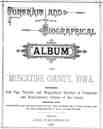 From
the late 1870s to the early 1920s, many counties (particularly in mid-western
states) published county histories which included detailed biographies of their
citizens. These biographies can be very helpful in documenting family history.
In addition to your direct ancestors, look for biographies for your ancestors'
brothers, uncles, cousins, etc. as their biographies will often mention your
direct ancestors. From
the late 1870s to the early 1920s, many counties (particularly in mid-western
states) published county histories which included detailed biographies of their
citizens. These biographies can be very helpful in documenting family history.
In addition to your direct ancestors, look for biographies for your ancestors'
brothers, uncles, cousins, etc. as their biographies will often mention your
direct ancestors.
Over 3,000 of these histories are now available online for FREE.
Click here for links to county and town
histories arranged by state.
NOTE: Whenever you copy or download information from a county or
town history, be sure to obtain the title page and publication information as
well.
|
|
|
|
MILITARY RECORDS
|
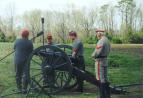 Basically, there are two types of military records that are of interest to genealogists: service records and pension application records.
Service records provide very little genealogical information. They are used
primarily to prove military service. They provide information on rank, military
unit, dates of service, and discharge. Basically, there are two types of military records that are of interest to genealogists: service records and pension application records.
Service records provide very little genealogical information. They are used
primarily to prove military service. They provide information on rank, military
unit, dates of service, and discharge.
Pension application records are the most valuable military records for family history information.
Because persons applying for military pensions had to prove their service, these records
often contain valuable genealogical information such as vital statistics, family relationships, marriage information, and children's names.
Complete pension files for the Revolutionary War are available on
Ancestry.com. Pension records from the War of 1812 are currently
being digitized.
Click here
for a free index to some of these files. The National Archives has pension files for veterans and widows from the Mexican War, Indian Wars, and Civil War (Union only).
Confederate pensions
are maintained by the eleven former Confederate states and Kentucky, Missouri, and Oklahoma.
MILITARYINDEXES.COM
Like DeathIndexes.com in Module III, MilitaryIndexes.com links to dozens of free and fee-based searchable databases for military records from the Revolutionary War up through the Vietnam War.
For example, you can search and view the Florida World War I Service Cards for men and women who either resided in Florida or who entered service in the state of Florida.
DEMONSTRATION PRACTICE
RESEARCHING YOUR REVOLUTIONARY WAR PATRIOT
FREE TUTORIAL
If you are curious whether you have any Revolutionary War patriots lurking in your family tree,
this free tutorial provides a step-by-step process for finding and documenting
ancestors who aided in achieving American independence.
|
|
|
|
NEWSPAPERS
|
 Newspapers often contain valuable genealogical information including marriage notices, obituaries, Newspapers often contain valuable genealogical information including marriage notices, obituaries,
and news items.
Many state libraries and archives allow patrons to review microfilmed copies of newspapers at the library's facilities.
In addition, some libraries lend the microfilm to individuals outside the area through interlibrary loan.
Contact the
state library or archive in your state of interest for more information.
LIBWEB
Another option for locating newspapers is to contact the local public library in your research area.
Many public libraries maintain microfilmed copies of local newspapers.
If you know the exact date of your ancestor's death or marriage, a librarian may be willing to research your article and print a copy for you for a nominal fee.
Libweb provides links to local library Web sites throughout the U.S.
|
|
|
MODULE IV ACTIVITIES
|
- Search Probate Records & Vital Records for wills.
- Search the Family History Library Catalog for microfilms of probate records for your ancestors.
Most probate records are located at the county level. To determine the county in which a town is located, use the
County Boundary
Database.
Check county and town histories for biographies that mention your ancestors.
Explore the web sites of state libraries and archives for the states where your ancestors resided.
Become familiar with the genealogical resources and services available there.
If you find an ancestor who was born between 1710 and 1765 and who was alive after 1775,
review the free tutorial "Researching Your Revolutionary War Patriot."
Search the Libweb site to find the local public libraries in your ancestral counties and towns.
If you know the death date and location for an ancestor, contact the library and request an obituary.
Update your Ancestor Charts and Family Group Sheets.
Previous | Next
Contact Us
|
|
|
Copyright © 2004 - 2019 by Debbie Duay, Ph.D., Fort Lauderdale, FL. All Rights Reserved.
|
| | |
|
|
 IV - Exploring Further